
MECC-Permitted Transport, Tracking & Compliant Disposal of Hazardous Materials in Qatar
Hazardous Waste Management Services
Safe, fully documented handling of industrial, chemical, construction-related, medical, electronic, and NORM waste — from site to licensed treatment facility.
Sustainable Architecture
Specialist Hazardous Waste Handling — Compliant from Collection to Disposal
KMA Qatar’s haulage fleet — including heavy-duty dump trucks and tankers — is equipped and permitted to transport materials that require specialised containment and disposal protocols. Managing hazardous waste in Qatar demands more than a capable vehicle: it requires the right permits, trained operators, approved routes, and full manifest documentation.
All hazardous waste transport conducted by KMA is carried out using vehicles specifically permitted by the Ministry of Environment and Climate Change (MECC). Our trained personnel follow designated routes to specialised treatment facilities, including those located in Mesaieed Industrial City. Every shipment is accompanied by a Waste Manifest (consignment note), ensuring that every litre or tonne of hazardous material is tracked from point of generation to final treatment.
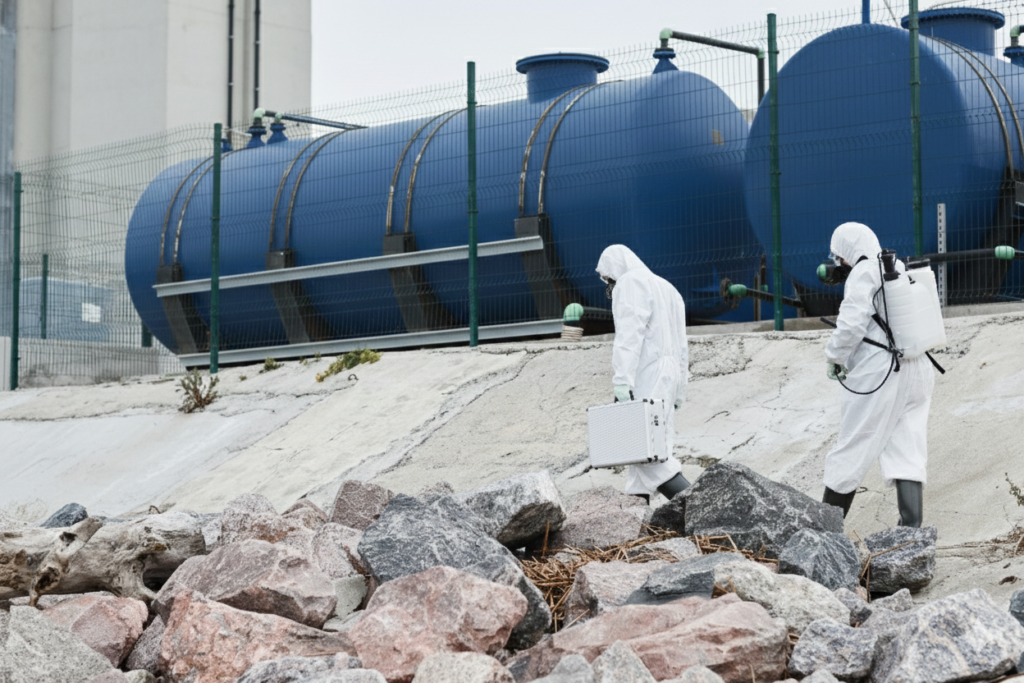
Type of services offered
Industrial & Chemical Waste
The most prevalent category in Qatar's industrial sector. Includes chemical solvents, acids and alkalis, oily sludge, hydrocarbon-contaminated soils, and heavy metal residues. These materials are typically treated via stabilisation, chemical neutralisation, or high-temperature incineration at specialised plants.
Construction-Related Hazardous Waste
Specific to Qatar's infrastructure and demolition sector. Includes asbestos found in older insulation, lead-based paints, adhesives, resins, and contaminated aggregates from brownfield sites. Requires airtight containment during transport and disposal in dedicated hazardous waste landfill cells.
Medical & Biomedical Waste
High-risk waste from hospitals, clinics, and laboratories — including sharps (needles and scalpels), infectious cultures, expired pharmaceuticals, and anatomical waste. Strictly regulated by the Ministry of Public Health (MoPH) and MECC; typically destroyed through specialised medical waste incinerators or autoclaving.
E-Waste (Electronic Waste)
Discarded electrical and electronic devices, including lead-acid and lithium-ion batteries, old circuit boards, and mercury-containing lamps. Management focuses on resource recovery — valuable metals are extracted while toxic components such as mercury and cadmium are safely sequestered.
Naturally Occurring Radioactive Material (NORM)
Primarily associated with Qatar's Oil & Gas sector. Includes scales and sludges that accumulate in pipes and tanks during petroleum extraction. Requires specialised radiation protection protocols and licensed storage or decontamination facilities.
Our Compliance Framework
Our Compliance Framework
Permit-Based Transport
All hazardous waste transport is conducted using MECC-permitted vehicles operated by certified personnel, following designated routes to approved treatment facilities.
Documentation & Tracking
Every shipment is accompanied by a Waste Manifest (consignment note), ensuring full traceability from the site of generation to the final treatment facility.
Why Choose Us
Why Partner with KMA?
- MECC-Permitted Fleet: Vehicles are specifically permitted for hazardous material transport — not adapted after the fact.
- Full Manifest Documentation: Every movement is tracked and recorded, protecting your organisation from regulatory liability.
- Trained Operators: Personnel are certified in hazardous material handling, containment, and emergency response.
- Approved Disposal Routes: All waste is routed to licensed treatment facilities, including Mesaieed Industrial City, meeting Qatar’s highest environmental standards.
- Broad Category Coverage: From chemical solvents and medical waste to e-waste and NORM — one partner for all regulated materials.